Industry News
NEWS AND UPDATES FROM THE MEDIA INDUSTRY
Digital audio has moved past the experimental phase into market maturity for content producers in 2026
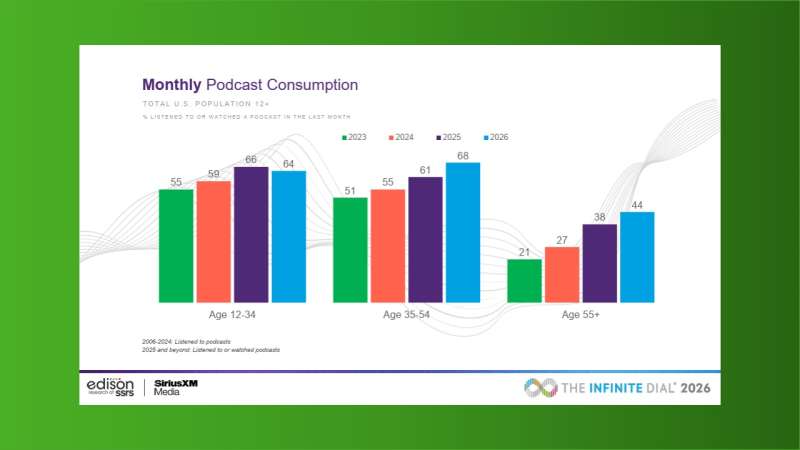
The Infinite Dial 2026 by Edison Research, the longest-running longitudinal survey of U.S. digital media consumer behavior, released its findings for the 28th year. The time series shows how audio listening reach has grown from 6% in 1998 to an estimated 81% in 2026. Other highlights:
- Growth has come from the 55+ demographic reaching 70%; while younger groups (12–34) remain at near-saturation of 88%. While media brands often obsess over Gen Z, the data shows that there is growth real opportunity for the oldies, but goodies
- 76% of Americans (219 million) consume online audio at least weekly; this high frequency may be the beginning of customer captivity for some shows and could be the beginning of a competitive moat
- Spotify remains the market leader in monthly usage at 36%, followed by YouTube Music at 34%; Pandora is next highest at 21%
- Podcasting is a dual-format medium: 57% of Americans have both listened to and watched a podcast; in other word, video is no longer optional for audio-centric content
Read the full report from Edison. #managementconsulting #mediaconsulting #customercaptivity
Short, Vertical, and Compelling: Where Microdramas are Outpacing Streamers on Mobile
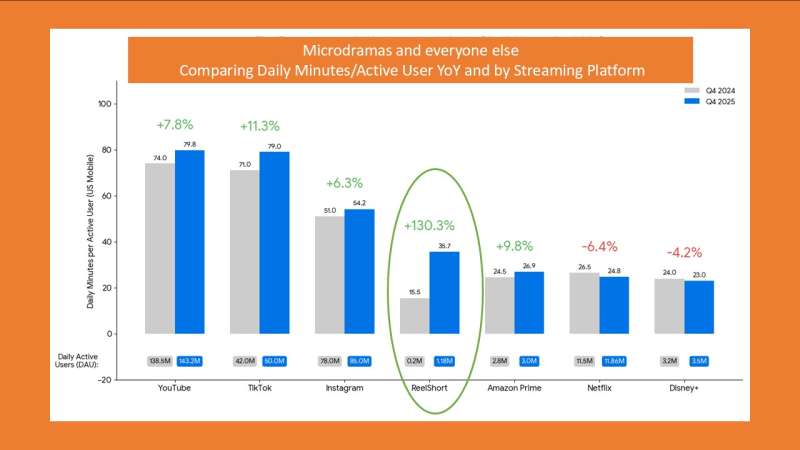
A new streaming category is attracting consumer attention: the Microdrama, typically 1- to 2-minute episodes focusing on women aged 25–45, is gaining fans. According to a recent report from Omdia, these ultra-short, vertical, mobile-first productions are now outperforming some major streamers in daily engagement intensity for their active users.
- While Netflix has 12 million monthly active mobile users in the US compared to 1.1 million for ReelShort, the Microdrama distributoer, RealShort is the winner in intensity, with 36 minutes per user/day compared to Netflix at 25 minutes per user/day.
- Microdramas are created to capture "interstitial" time—the small gaps throughout the day—where long-form content is less easily consumed in these tiny bites.
- Microdramas frequently utilize "pay-per-episode" or ad-supported models that resemble mobile gaming ecosystems.
- Omdia estimates that U.S. Microdrama revenues reached ~$5.5 billion in 2025 and are projected to hit ~$7 billion by the end of 2026.
Read the full story on Omdia. Additional information is available from SensorTower, State of Short Drama Apps and Short-Drama Redefines Mobile Entertainment and Leading Brands in the U.S….Q4 2024.
#managementconsulting #contentstrategy #mediaconsulting
Rights, robots, and royalties: Navigating legal questions and generative music
The legal and industry disputes surrounding music and generative AI make your eyes cross. And it will get worse. The excellent summary published by the music business consultancy, Complete Music Update (CMU) explains the basics and why we will see continued intense litigation and lobbying. They “assure” us that the result will be even more complex licensing deals between music labels and AI companies.
The issues can be divided into input and output disputes.
Legal Questions on the Input. Training AI models with existing music files to create a training dataset.
- Licensing vs. fair use: AI companies often argue that training is covered by "fair use" (in the US) or "text and data mining" (TDM) exceptions, while the music industry insists that these companies must secure permission and pay fees to rights owners before making any copies.
- The sourcing of data: A significant legal distinction is emerging regarding where data is obtained. A recent US ruling suggested that training might be fair use if the data is sourced from legitimate copies, but not if it is downloaded from piracy sites.
- Settling lawsuits out of court: Rather than waiting for court rulings, major labels like Universal and Warner are beginning to settle lawsuits and enter licensing deals with AI platforms like Suno and Udio.
Legal Questions on the Output. New content—audio, lyrics, or vocals—that the AI generates after being trained.
- Infringement by design or accident: When an AI outputs an existing protected work (like a specific song's lyrics) or a clear adaptation, AI companies often claim these are the result of bugs rather than intentional design and say future "guardrails" will be the solution.
- Digital replica rights: Because there is no copyright in a human voice itself, the industry is pushing for new "digital replica" or "publicity rights" (such as the ELVIS Act in Tennessee) to prevent AI from imitating a specific artist's voice or likeness without consent.
- Creator consent and transparency: A major internal industry dispute is brewing over whether labels must get permission from individual artists and songwriters before opting their music into massive AI licensing deals.
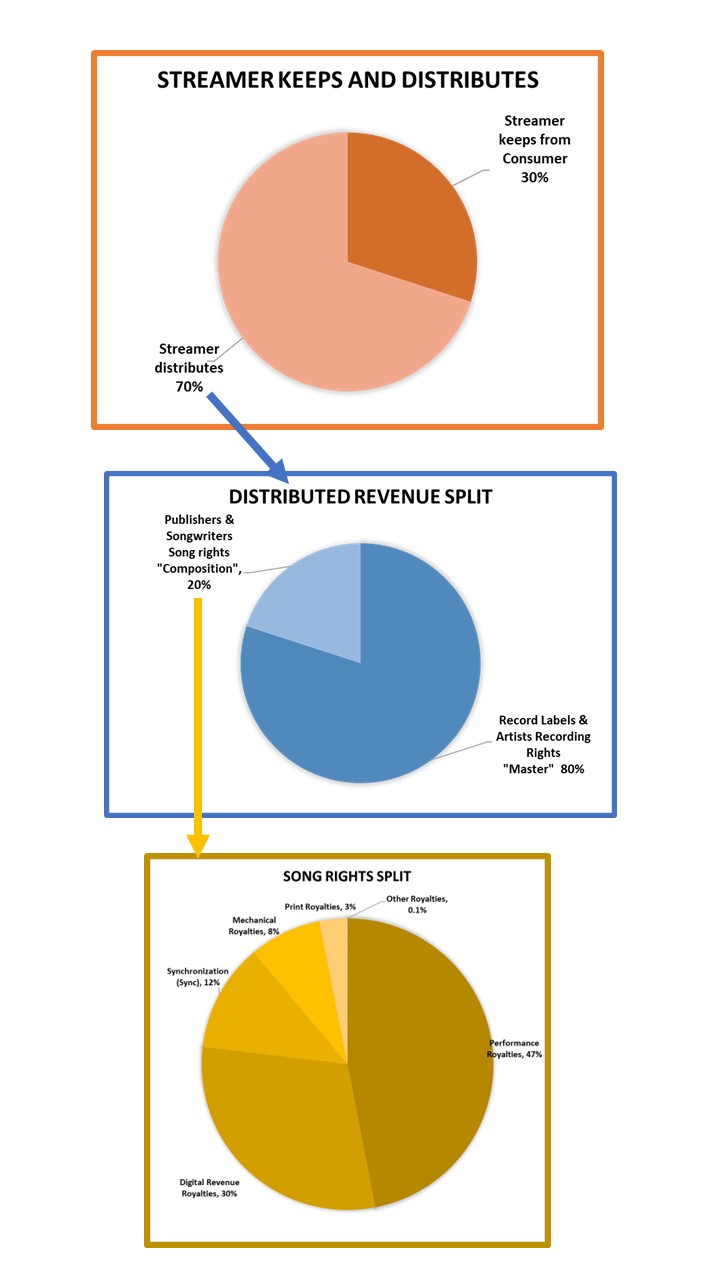
- Revenue splitting: There is currently no transparency on how AI money will be divided. It remains unclear if it will follow the traditional 80/20 streaming split between labels and publishers or the 50/50 split common in synchronization (film/TV) deals.
To read the full detailed article, go to Music and AI: 2025’s developments that will shape 2026’s disputes. To see the source intel on U.S. royalty splits go to Mordor Intelligence's Music Publishing Market Size & Share Analysis - Growth Trends and Forecast (2026 - 2031) #managementconsulting #musicrights #musiclabels #mediastrategy


